Basic of Artificial Lighting for Plants

Full spectrum Grow Lights in India
December 20, 2023

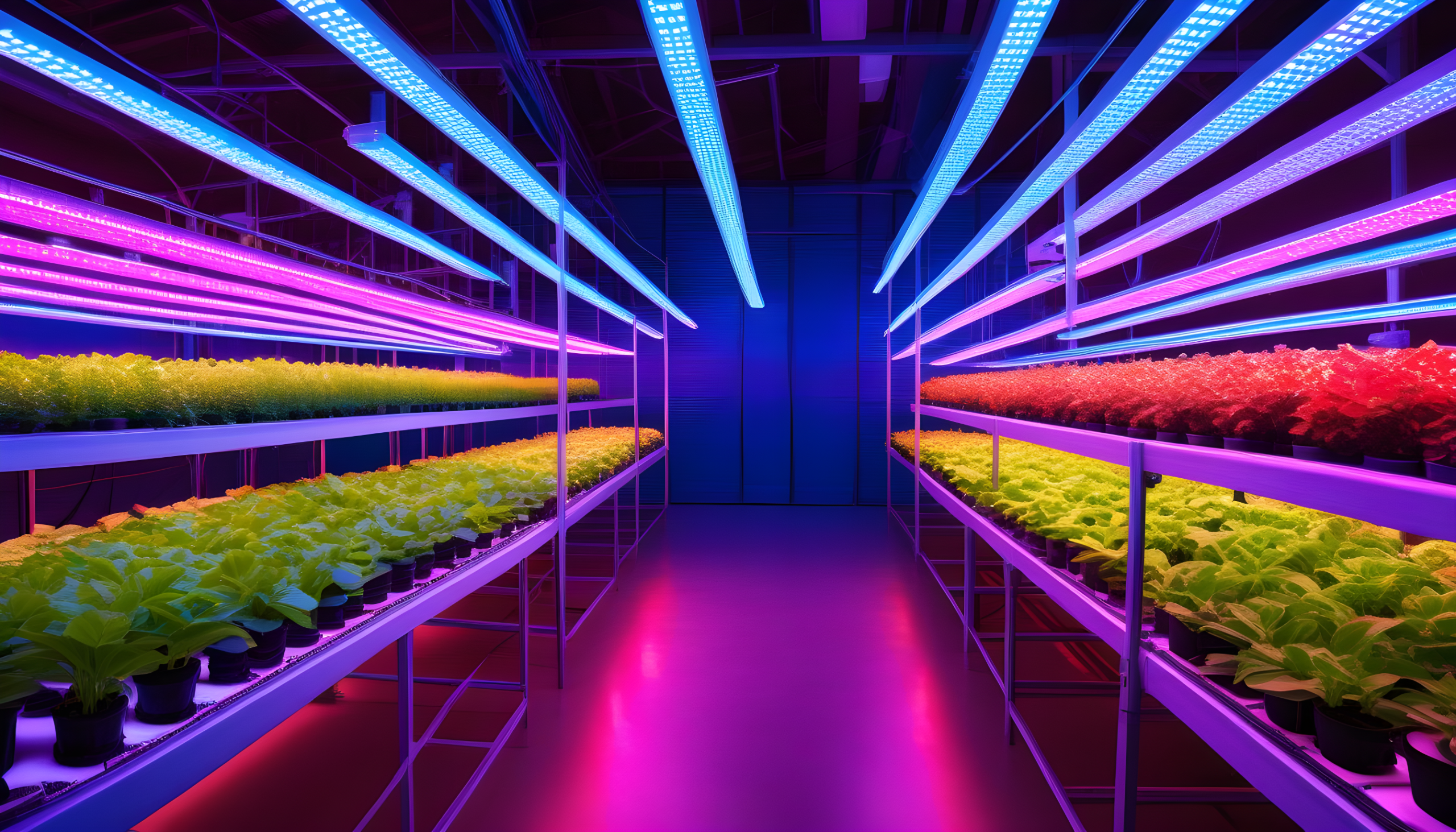
In the domain of indoor agriculture, full spectrum grow lights have emerged as indispensable tools, compensating for restricted sunlight and ensuring crops receive the complete range of necessary wavelengths. Especially in indoor settings, where natural sunlight is limited, these lighting systems play a pivotal role in delivering the essential light spectrum required for robust plant growth, flowering, and fruiting stages.

Understanding Full Spectrum Grow Lights

Full spectrum grow lights encompass a range of lighting solutions specifically designed for indoor cultivation. These lights replicate the entire electromagnetic spectrum, akin to natural sunlight, providing plants with essential wavelengths required for photosynthesis and overall growth.

Key Considerations in Grow Light Selection:

– PPE (Photosynthetic Photon Efficacy): Measuring a grow light’s efficiency in converting electrical energy into photosynthetic photons, it’s crucial for optimizing indoor cultivation.

– PPFD (Photosynthetic Photon Flux Density): Determines light intensity reaching a specific area, vital for indoor setups.

– PAR (Photosynthetically Active Radiation) and Extended PAR (ePAR): These measure the range of light wavelengths crucial for indoor plant growth.

– UV and Far Red Inclusion: Full spectrum grow lights encompass these wavelengths, contributing significantly to indoor plant development.

– Optimal PPE Range: Aiming for a PPE range between 1.5 to 2.5 µmol/J ensures the efficiency of indoor grow lights.

– Managing Heat Emission: Controlling the heat emitted by these lights is critical for maintaining optimal indoor growing conditions.

– Spectrum Graph and Uniformity: Ensuring a uniform distribution of the light spectrum across the indoor cultivation space is essential for consistent plant growth.

– Wattage and Efficiency: Consider the wattage concerning efficiency and energy consumption in indoor settings.

Nexsel’s Distinct Light Spectrum for Indoor Cultivation

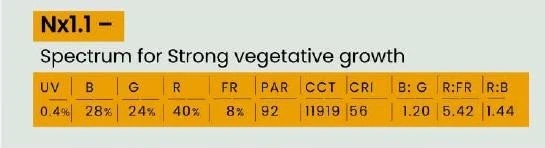
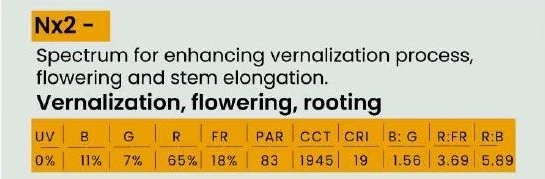
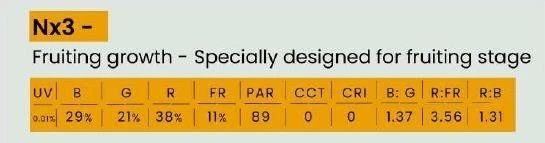
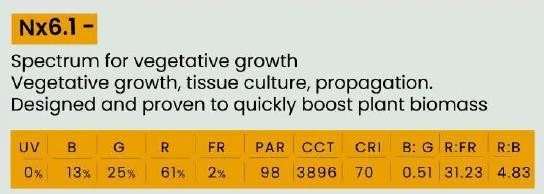
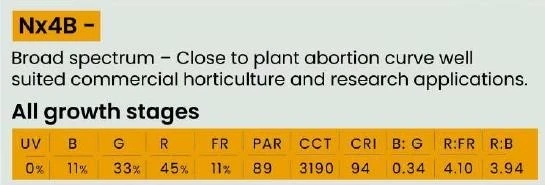
At Nexsel, our commitment to innovation and precision led us to curate specific light spectra tailored for indoor agricultural applications. Our full spectrum grow lights cater specifically to indoor growing environments, ensuring that plants receive the complete range of necessary wavelengths for optimal growth and development.
Following are some of the Spectrum developed by Nexsel for various applications:

For more details of above spectrums, please refer spectrum selection guide : https://nexsel.tech/nexsel-spectrum-selection-guide.php

Full spectrum grow lights serve as essential alternatives to natural sunlight. Tailored for indoor settings where sunlight is restricted, these lights ensure plants receive the complete spectrum of necessary wavelengths, including PAR, UV, and far-red light. Nexsel’s dedication to crafting precise light spectra for indoor cultivation purposes enables farmers in India to optimize

Spectrum lights are a game-changer in both horticulture and general lighting applications. Designed to replicate the full range of natural sunlight, these lights ensure optimal performance for plant growth and indoor environments. A full spectrum light covers the entire visible light spectrum, along with ultraviolet (UV) and infrared (IR) wavelengths, making it an essential tool for indoor gardening, green walls, and vertical farming setups.

Why Choose Full Spectrum Lights?

A full spectrum lamp delivers light similar to natural sunlight, which is ideal for promoting photosynthesis in plants. Whether you’re a hobbyist gardener or a commercial grower, full spectrum LED lights cater to all your indoor growing needs. Unlike traditional lighting options, these lights are energy-efficient, long-lasting, and eco-friendly, providing consistent illumination without overheating.

Benefits of Full Spectrum LED Grow Lights

  1. Enhanced Plant Growth: Full spectrum LED grow lights provide the necessary light wavelengths for every growth stage, from seedling to flowering.

  2. Energy Efficiency: Spectrum LED lights consume less power while delivering optimal brightness.

  3. Customizable Options: Full spectrum grow lamps can be tailored to specific plant requirements, ensuring healthier and faster growth.

  4. Durability: Full spectrum lamps last significantly longer than traditional bulbs, reducing replacement costs.

Understanding Spectrum Plant Lights and Their Importance

Spectrum plant lights play a crucial role in replicating the complete range of sunlight required for plant development. Unlike traditional bulbs that emit limited wavelengths, full spectrum bulbs and plant spectrum lights provide balanced illumination from ultraviolet to infrared, supporting every phase of plant growth. These full spectrum lights for plants enhance chlorophyll absorption, boost photosynthesis efficiency, and ensure healthier leaves and flowers. Whether you’re growing herbs or flowering plants, spectrum plant lights create ideal indoor conditions for consistent and vigorous growth.


Applications of Full Spectrum Plant Lights

Full spectrum plant lights are widely used in various industries and setups, including:

Indoor Gardening: Ideal for small-scale home gardens.
Commercial Farming: Essential for vertical farming, hydroponics, and greenhouses.
Aquariums and Terrariums: These lights mimic natural sunlight, supporting aquatic plant life and enhancing visual aesthetics.
Office and Home Lighting: Full-spectrum LED lights improve focus and reduce eye strain, making them suitable for workspaces.

Spectrum LED Lights for Indoor Cultivation

Spectrum LED lights are an innovative solution for indoor cultivation. Their versatility makes them a preferred choice for growers who aim to maximize yields and reduce energy consumption. Full spectrum LED grow lights are particularly effective for plants that require high light intensity, such as tomatoes, strawberries, and leafy greens.

Key Features of Full Spectrum Grow Lamps

UV and IR Integration: Supports plant immunity and flowering phases.
Heat Management: Full-spectrum lamps produce minimal heat, preventing plant damage.
Compact Design: Easy to install and ideal for small spaces.

LED Full Spectrum Bulbs and Panels for Indoor Growing

Modern LED full spectrum lights and full spectrum LED bulbs have revolutionized indoor cultivation by offering energy-efficient and customizable lighting solutions. A LED panel full spectrum setup provides even light coverage, minimizing shadows and maximizing plant exposure. Growers can also choose full spectrum bulbs for plants to fine-tune wavelength output for specific crops, from seedlings to fruit-bearing stages. These artificial grow lights are ideal for hydroponic systems, home gardens, and vertical farms, ensuring optimal light intensity and spectrum uniformity while keeping energy use minimal.

Why Invest in Full Spectrum LED Grow Lights?

Investing in full spectrum LED lights is a smart decision for both personal and commercial applications. These lights simulate natural daylight, fostering optimal growth conditions for plants while providing superior energy savings. Additionally, their eco-friendly nature aligns with sustainable farming practices.

In conclusion, full spectrum light technology is reshaping the way we approach indoor lighting and cultivation. With advanced features and unparalleled efficiency, full spectrum LED lights, full spectrum grow lamps, and full spectrum plant lights have become indispensable tools for modern growers. Choose spectrum lights for brighter, healthier, and more productive environments.

If you have any question or query then you can comment below or send email on info@nexsel.tech

LED GROW LIGHT | PLANT GROW LIGHT | Full spectrum grow light |Hydroponics grow light | Artificial lights for indoor plant | Best grow lights

Got questions?

Frequently Asked Questions

Full spectrum grow lights are artificial lights designed to replicate natural sunlight by providing a broad range of wavelengths, including blue, red, and sometimes UV and infrared light. These lights support all stages of plant growth, from seedlings to flowering and fruiting.

Plants require different light wavelengths during different growth stages. Full spectrum grow lights provide balanced illumination that supports photosynthesis, root development, vegetative growth, flowering, and fruit production in indoor farming environments.

Full spectrum LED grow lights use multiple LED chips to emit wavelengths across the PAR range (400–700 nm), along with optional UV and far-red light. This creates a sunlight-like spectrum optimized for plant growth indoors.

Red-blue grow lights focus mainly on photosynthesis wavelengths, while full spectrum grow lights provide a more natural and balanced spectrum. Full spectrum LEDs are generally preferred because they support healthier overall plant development and better visual working conditions.

Yes. Full spectrum LED grow lights are widely used in indoor farming because they: Support all plant growth stages Improve crop quality Reduce electricity consumption Generate less heat Offer better spectrum control These advantages make them ideal for hydroponics, vertical farming, and controlled environment agriculture.

Full spectrum grow lights are suitable for: Leafy greens Herbs Tomatoes Strawberries Microgreens Flowers Medicinal plants Tissue culture plants Different crops may require different PPFD levels and photoperiods for optimal growth.

Yes. Full spectrum grow lights are designed to simulate natural sunlight and can successfully support indoor plant growth when natural light is insufficient or unavailable.

Benefits include: Faster plant growth Better photosynthesis Energy efficiency Lower heat generation Longer lifespan Improved crop quality Reduced electricity costs Modern full spectrum LEDs also allow crop-specific spectrum customization.

Some advanced full spectrum grow lights include UV and infrared wavelengths to support flowering, plant immunity, and secondary metabolite production.

Plants mainly use: Blue light (400–500 nm) for vegetative growth Red light (600–700 nm) for flowering and fruiting Many growers also use far-red and UV wavelengths to improve plant quality and growth responses.

Yes. LED full spectrum grow lights consume significantly less electricity compared to traditional HPS or fluorescent lighting systems while delivering higher PAR efficiency and lower heat output.

PAR refers to the photosynthetically active radiation range (400–700 nm) used by plants for photosynthesis. Full spectrum grow lights provide a balanced distribution of wavelengths across and beyond the PAR range to simulate natural sunlight more effectively.

Yes. Full spectrum LED grow lights are widely used in hydroponic farming because they provide controlled, energy-efficient lighting that supports high-yield indoor crop production.

The required PPFD depends on the crop: Leafy greens: 150–300 µmol/m²/s Herbs: 200–400 µmol/m²/s Fruiting crops: 400–800+ µmol/m²/s Commercial growers optimize PPFD based on crop stage and DLI targets.

Yes. Properly designed full spectrum grow lights can improve: Photosynthesis efficiency Biomass production Flowering Fruit quality Yield consistency This is especially important in controlled environment agriculture.

Full spectrum grow lights are used in: Hydroponics Vertical farming Greenhouses Indoor gardening Tissue culture labs Agritech research Controlled environment agriculture (CEA)

Lighting duration depends on crop type: Leafy greens: 14–18 hours Herbs: 12–16 hours Fruiting crops: 12–18 hours Growers balance photoperiod and PPFD to achieve target DLI values.

Most high-quality LED grow lights last: 50,000+ hours with proper thermal management and high-efficiency LED chips.

Yes. Modern LED grow lights are designed for safe indoor operation with: Low heat generation Stable drivers Waterproof protection (IP-rated models) Energy-efficient operation Commercial models may also include thermal and surge protection.

Compared to HPS lights, LED full spectrum grow lights offer: Better energy efficiency Lower heat Longer lifespan Better spectrum control Reduced cooling costs Higher PPE efficiency This makes LEDs more suitable for modern indoor farming systems.

Related Articles

Hydroponics with LED lights in UAE
Basic of Artificial Lighting for Plants

Hydroponics with LED lights in UAE

Abstract : In this study, the effect of different light emitting diode (LED) grow light wavelength and power of the LED lights on plant growth were investigated by adopting nutrient film technique of hydroponic indoor vegetable farming. Commercial LEDs are deployed in this work, and the findings ben...

Oct 17, 2024 Mr. Vishal Bhosale

Don't have an account?

Reset link sent!

Check your email for the password reset link.

Enter your email address and we'll send you a link to reset your password.

Already have an account?

Nexsel

Get Quote

Nexsel

Before You Go!

Get a free consultation from our lighting experts.