 UAE
UAE
How to Measure Light Intensity for Plants


Frequently Asked Questions
Plant light intensity refers to the amount of usable light energy reaching plants for photosynthesis and growth. It directly influences plant health, growth rate, flowering, and yield.
Measuring light intensity helps growers ensure plants receive the correct amount of light for healthy growth. Both insufficient and excessive light can negatively affect photosynthesis and crop performance.
PPFD (Photosynthetic Photon Flux Density) measures the amount of photosynthetically active light reaching a surface every second. It is expressed in µmol/m²/s and is widely used in horticulture lighting.
PAR (Photosynthetically Active Radiation) refers to the light spectrum between 400–700 nm that plants use for photosynthesis. PAR measurements help growers evaluate lighting effectiveness for plants.
Common devices used for plant light measurement include PAR meters, quantum sensors, spectrometers, and lux meters. Professional growers commonly use PAR meters for accurate PPFD measurement.
A PAR meter measures usable light for photosynthesis, while a lux meter measures brightness perceived by the human eye. PAR meters are more accurate for evaluating plant lighting conditions.
A PAR meter measures the intensity of photosynthetically active radiation reaching plants within the 400–700 nm wavelength range used during photosynthesis.
The ideal PPFD depends on the crop type. Leafy greens typically require 150–300 µmol/m²/s, while fruiting plants may require 400–800+ µmol/m²/s.
Yes. Sunlight intensity can be measured using PAR meters and spectrometers to determine PPFD and DLI values for outdoor and greenhouse cultivation.
DLI (Daily Light Integral) measures the total amount of PAR light plants receive in a 24-hour period. It combines light intensity and photoperiod to evaluate daily light exposure.
PPFD measures instantaneous light intensity, while DLI measures total daily light accumulation. Growers use both metrics to optimize plant lighting schedules.
LED grow lights provide high energy efficiency, lower heat generation, long lifespan, and customizable spectrum control for indoor plant cultivation.
Light intensity decreases as the distance between plants and the light source increases. Proper hanging height is important to maintain uniform PPFD levels.
Low light intensity can cause slow growth, weak stems, pale leaves, reduced flowering, and poor crop yield. Plants may also stretch toward the light source.
Yes. Excessive light intensity can lead to leaf burn, heat stress, photoinhibition, and reduced photosynthesis efficiency in plants.
Related Articles
Plant Lighting Troubleshooting
Introduction: Plant lighting, also known as grow lights or artificial lights, plays a crucial role in supporting plant growth, especially in indoor or shaded environments. With various lighting sources available, including HPS, CFL, MH, and LED, LED has emerged as the most efficient and preferred ch...
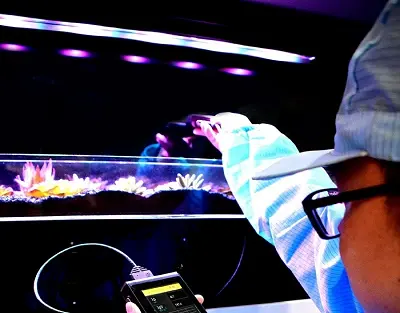
PAR METER for plants: A Must-Have Device for Optimal Plant Growth
Light intensity is a critical factor that directly affects plant growth and development. As a plant owner or farmer, it is essential to have a
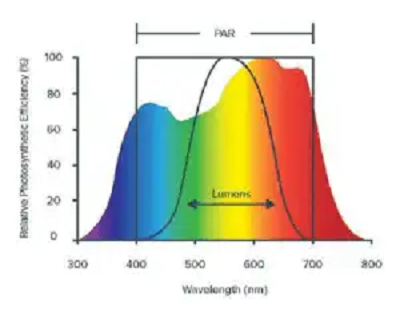
What is the difference between PAR meter, Spectrometer and LUX meter
McCree curve represent the plant light absorption pattern in light spectrum. PAR is the region between 400 nm to 700 nm
Don't have an account?
Reset link sent!
Check your email for the password reset link.
Enter your email address and we'll send you a link to reset your password.
Already have an account?

Get Quote
Before You Go!
Get a free consultation from our lighting experts.