 UAE
UAE
Lighting Strategies for Tissue Culture and Micropropagation
Frequently Asked Questions
Tissue culture lighting refers to the artificial lighting systems used in plant tissue culture laboratories to support in vitro plant growth, micropropagation, and controlled development of plant cultures.
Lighting influences photosynthesis, shoot development, root formation, chlorophyll production, and overall plant morphology during tissue culture and micropropagation processes.
LED grow lights are commonly used in tissue culture labs because they provide spectrum control, low heat generation, energy efficiency, and uniform illumination.
LED grow lights offer better spectrum customization, lower power consumption, longer lifespan, and reduced heat stress compared to fluorescent lighting systems.
Micropropagation is a laboratory technique used to rapidly multiply plants from small tissue samples under sterile and controlled environmental conditions.
Blue and red wavelengths are commonly used in tissue culture because they support shoot multiplication, chlorophyll synthesis, and healthy plant development.
Blue light promotes compact growth, chlorophyll development, and stronger shoot formation in tissue culture plants.
Red light supports photosynthesis, shoot elongation, and biomass accumulation during plant tissue culture growth stages.
Most tissue culture laboratories maintain a photoperiod of approximately 16 hours light and 8 hours dark for optimal plant growth.
Tissue culture plants generally require lower light intensity compared to greenhouse crops, often ranging between 30–80 µmol/m²/s depending on plant species and growth stage.
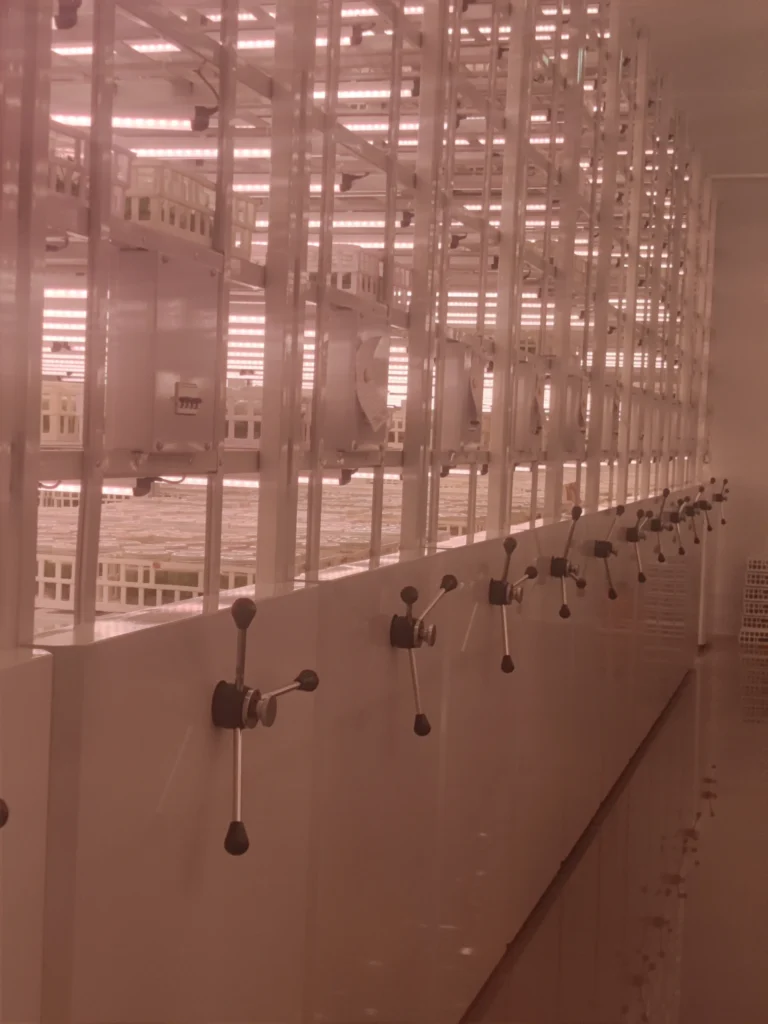
Excessive heat can damage sensitive plant tissues and alter sterile laboratory conditions. LED lighting helps maintain stable temperatures during cultivation.
Yes. Full spectrum LED grow lights can support multiple growth stages and provide balanced wavelengths for healthy tissue culture development.
Proper lighting conditions improve shoot initiation, shoot multiplication rate, and uniform plantlet development during micropropagation.
Advantages include energy efficiency, customizable spectrum, lower maintenance, longer lifespan, reduced heat output, and improved plant growth consistency.
Uniform lighting ensures consistent plant growth across all culture shelves and reduces variability in tissue culture production.
Yes. Tissue culture plants are typically grown entirely under artificial lighting in controlled laboratory environments.
Light intensity affects photosynthesis, leaf expansion, chlorophyll formation, and overall growth rate of tissue culture plants.
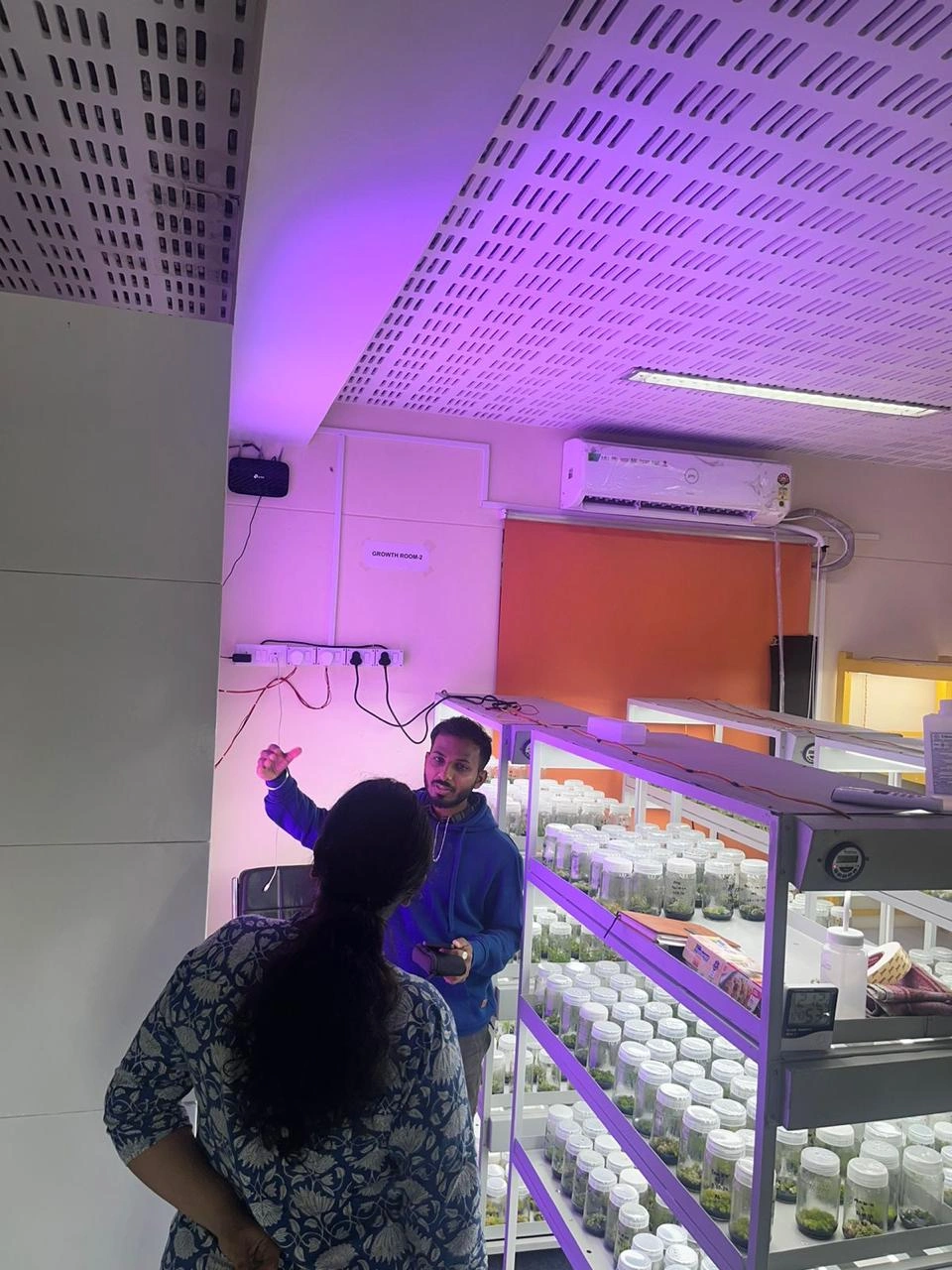
Modern labs use LED grow lights, programmable photoperiods, controlled spectrum management, and energy-efficient lighting systems to improve plant production efficiency.
Yes. Commercial micropropagation facilities widely use LED grow lights because they support scalable, energy-efficient, and uniform tissue culture production.
The future includes smart LED systems, automated spectrum control, IoT-based environmental monitoring, and crop-specific lighting optimization for advanced plant tissue culture applications.
Related Articles
LED vs Fluorescent Lights in Tissue Culture: Save Cost & Increase Production
LED vs Fluorescent Lights in Tissue Culture: Save Cost & Increase Production
Tissue Culture Lighting Cost
When considering the replacement of conventional CFL lights with LED lights, lighting cost and return on investment (ROI) are crucial factors to consider.
Plant Tissue Culture Lighting
In the world of plant tissue culture, providing the ideal lighting conditions is crucial for successful propagation and growth. The use of LED lights has revolutionized the industry, offering several advantages over conventional fluorescent lights. Let’s explore the benefits of LED lights & how Nexs...
Don't have an account?
Reset link sent!
Check your email for the password reset link.
Enter your email address and we'll send you a link to reset your password.
Already have an account?

Get Quote
Before You Go!
Get a free consultation from our lighting experts.