 UAE
UAE
What Is The Photosynthesis Process ?
Frequently Asked Questions
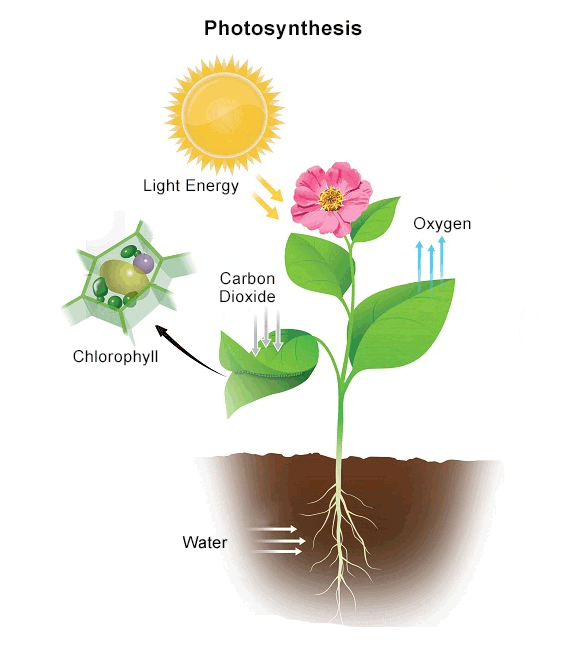
Photosynthesis is the biological process through which plants convert light energy, carbon dioxide, and water into glucose and oxygen. It is essential for plant growth and survival.
Photosynthesis provides plants with the energy required for growth, flowering, fruiting, and metabolic activities while producing oxygen as a byproduct.
Photosynthesis primarily occurs in the chloroplasts found within plant leaves, especially in specialized cells containing chlorophyll pigments.
Chlorophyll absorbs light energy from sunlight or grow lights and helps initiate the photosynthesis process in plants.
Photosynthesis requires light energy, water, carbon dioxide, and chlorophyll to produce glucose and oxygen.
The basic photosynthesis equation is: Carbon dioxide + Water + Light energy ? Glucose + Oxygen.
Sunlight provides the energy required to drive chemical reactions that convert water and carbon dioxide into plant food.
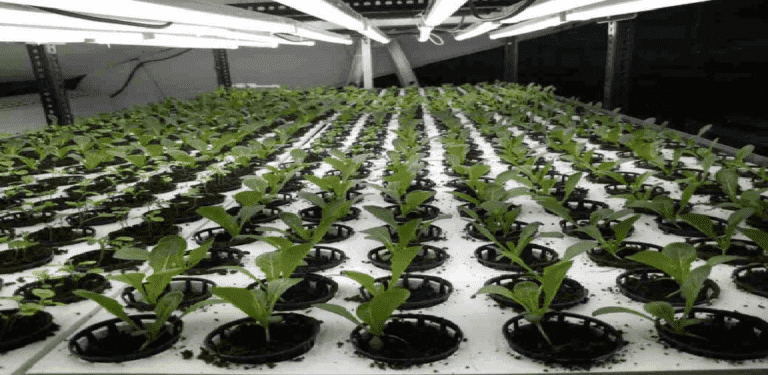
Yes. LED grow lights and full spectrum horticulture lighting can provide the wavelengths required for photosynthesis in indoor farming and hydroponics.
Blue light and red light are the most important wavelengths for photosynthesis because plants absorb these wavelengths efficiently for growth and energy production.
Carbon dioxide is absorbed through plant stomata and used to produce glucose during the photosynthesis process.
Water provides electrons and hydrogen molecules required during photosynthesis while also supporting plant nutrient transport and cellular functions.
Glucose is the sugar produced during photosynthesis that plants use as an energy source for growth and development.
Oxygen is released as a byproduct when water molecules are split during the light-dependent reactions of photosynthesis.
Photosynthesis efficiency depends on temperature because enzyme activity involved in the process functions best within specific temperature ranges.
Insufficient light can reduce photosynthesis rates, leading to slow growth, weak stems, pale leaves, and lower crop productivity.
LED grow lights provide optimized light spectrum, controlled intensity, and energy-efficient illumination that supports efficient photosynthesis indoors.
Photosynthesis produces the energy and sugars plants require for leaf development, root growth, flowering, and fruit production.
Photosynthesis absorbs carbon dioxide and releases oxygen, helping maintain atmospheric balance and supporting life on Earth.
Yes. Photosynthesis can occur under artificial lighting such as LED grow lights when plants receive suitable light spectrum and intensity.
Indoor farming and hydroponics rely heavily on controlled lighting to support photosynthesis, enabling year-round crop cultivation and efficient plant production.
Related Articles

Plant Light Intensity Measurement: Understanding Light for Optimal Growth
Introduction : Light is a crucial factor for plant growth, influencing processes like photosynthesis and development. The measurement of light intensity is important in understanding how much light plants are receiving and ensuring they get the right spectrum and intensity for optimal growth. Howeve...
Role of LED Grow Lights For Indoor Gardening In UAE & Middle East
Introduction: Indoor gardening has gained significant popularity in the UAE and the broader Middle East due to the region’s challenging climatic conditions. With high temperatures, limited rainfall, and arid landscapes, traditional outdoor gardening can be a daunting task. Enter LED grow lights, a g...

Hydroponics with LED lights in UAE
Abstract : In this study, the effect of different light emitting diode (LED) grow light wavelength and power of the LED lights on plant growth were investigated by adopting nutrient film technique of hydroponic indoor vegetable farming. Commercial LEDs are deployed in this work, and the findings ben...
Don't have an account?
Reset link sent!
Check your email for the password reset link.
Enter your email address and we'll send you a link to reset your password.
Already have an account?

Get Quote
Before You Go!
Get a free consultation from our lighting experts.